
The Fourth Way of Futurism.
The philosophy emerged from pursuing a central doubt:
Why isn't technology solving the world's problems and instead appears to be compounding them?
-
If the Attention Economy is about distraction, then market concentration is the real motive. Market concentration is at a 29-year high. Equity market concentration has reached record highs and k-shaped economies are growing in number.
Despite 305 million new businesses launching worldwide each year, the gap with corporate leviathans and hyperscalers is growing. So we first challenged ourselves to know, why is this happening?
The market landscape is growing more unhealthy and volatile.
Startups don’t stay up. Founders are often too fixated on selling-up to realise the market's lasting value.
SMEs can’t make productive change last. Owners wrestle with investment in resources, vision and skills .
Corporate change-makers aren’t set up to last. Leaving organisations too soon, stuck with their legacy.
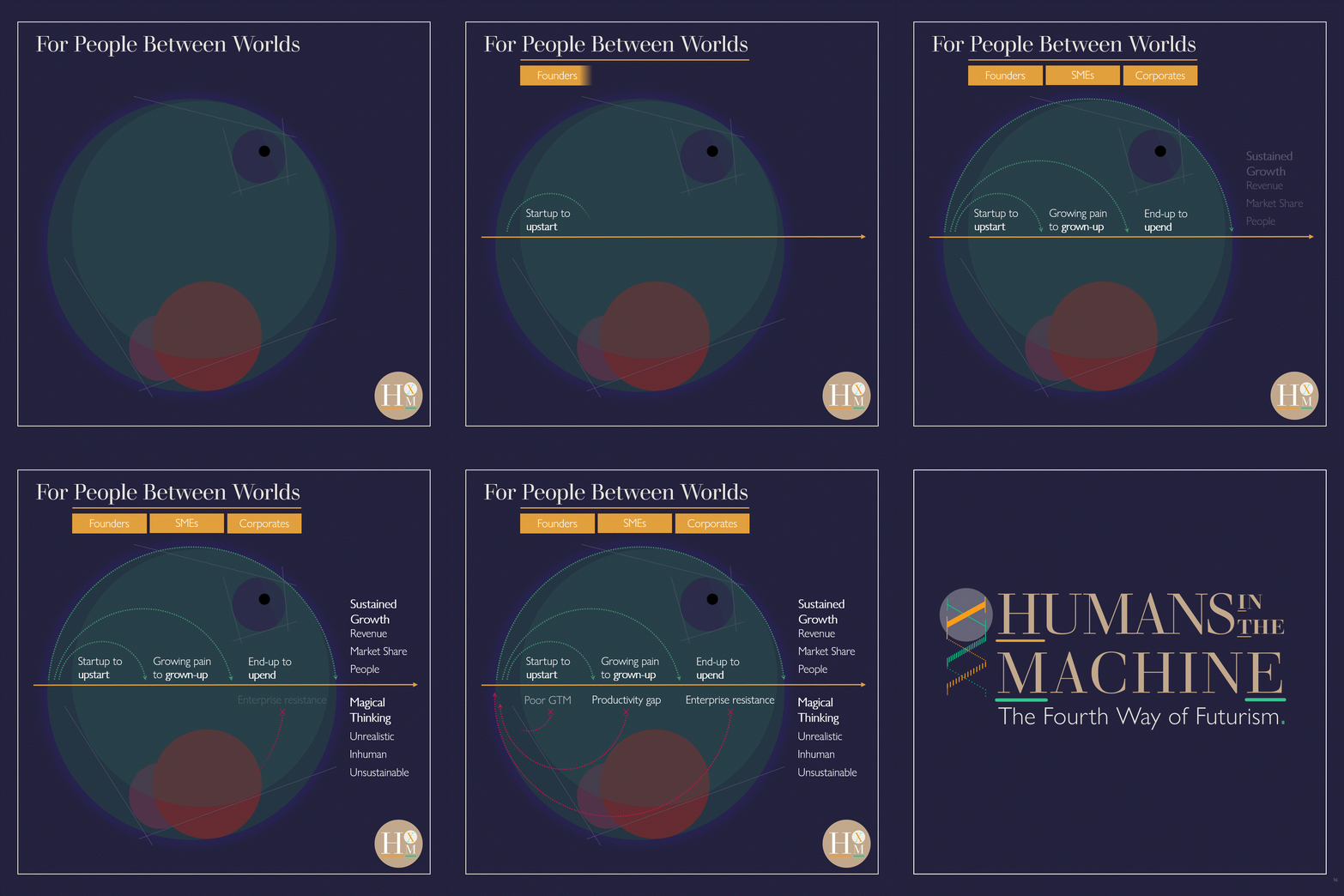
Companies resort to buying magic.

The hype cycle mythos serves tech’s competitiveness more than its customers.
Miracle Value Products normalise expectation, dissonance and disappointment to sell the next revolution in technology. Each wave adds more complication - just look at any tech vendor ecosystem map. All of which means that the hype cycle creates dependency.
-
The story of Oedipus is the quintessential Greek tragedy about a man who, in trying to run away from his fate, runs straight into it. Oedipus learned to his cost that if you know your future you will fulfil it. A prisoner of fate.
The hype cycle has a similar effect. Businesses lost $104 million on average in 2024 due to digital inefficiencies, such as underutilized technology and disjointed strategies. $2.3 trillion has been wasted globally in failed digital transformation programs.
What futures are dominant narratives already, and why can’t they allay our doubts?
Before the Fourth Way, futurism follows three broad paths — each powerful, but incomplete machine-led ideologies.

First Way.
The Collective | Mind
The hive mind seeks unity through shared intelligence. A singularity that promises coherence, an end to subjective truth and dissolving individual creativity into pure reason.

Second Way.
The Accelerated | Body
The augmented body pursues speed and optimisation. It builds capability but burns through resilience, mistaking motion for evolution. It is the superhero fantasy embodied.
Third Way.
The Idealist | Soul
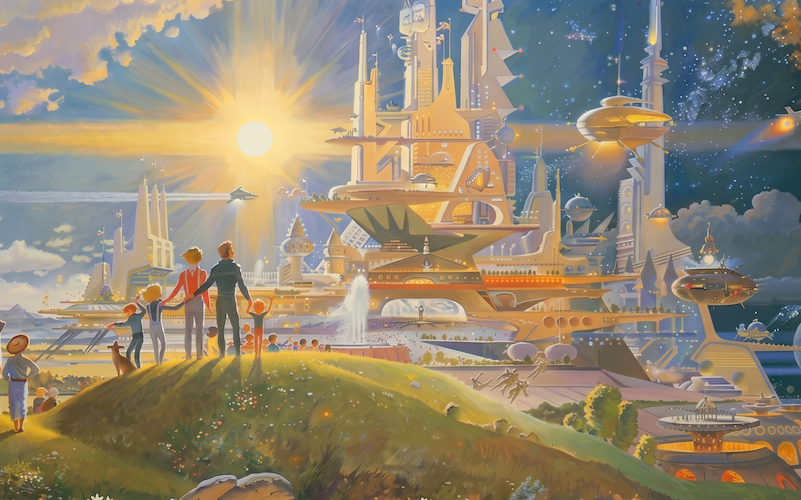
The utopian or “Protopian” Solarpunk future imagines perfection. It inspires vision and hope but avoids reality, trading achievable practice for intellectual posture.
These visions are not wrong. They are designed for another era and out of reach for ordinary life.
Nature tamed by human industriousness.
Originating from the industrial challenges of the last century, they require total commitment to a single domain, asking us to choose a path long before we can test its fit, as our own century confronts gathering systemic crises. They offer past knowledge, when reality demands we navigate unprecedented, interconnected change.
Complexity is accelerating 46× faster than the historical norm.
The more complex a system is, the more individuals matter.
The Industrial Revolution had its revolution. The Networked era has none. The Fourth Way of Futurism stands for a resourceful revolution.
-
Complexification is a wide body of scientific inquiry aimed at understanding how simple components, agents, or rules interact to spontaneously produce intricate, high-level, and adaptive, collective behaviors, often referred to as emergent properties.
When it comes to people, the “Complexity Profile” is a mathematical tool Yaneer Bar-Yam devised to visualise how the complexity of a system changes across different levels of scale.
Increasing social complexity from individuals to collective civilisations is a natural consequence of growing interdependence and the need to coordinate large-scale cooperation.

-
600-1,000 distinctive emerging technologies appeared in the main Gartner Hype Cycle since 1995.
-
5-10x expansion of investment vehicles in global finance and >20x diversity of products and asset classes since 2005.
-
A 200% growth in the number of specialist titles since 2005 and a 300% growth in the number of meetings since 2020.
-
After steady decline in working hours for 150 years, the number of people working 55+ hours per week is increasing again globally.
Our Philosophy
The Fourth Way of Futurism is inspired by the likes of philosopher Georgij Ivanovič Gurdžiev, the psychology of Alfred Adler, the design futurism of Syd Mead, and the hard science-fiction of Brian Herbert and Ursula Le Guin.
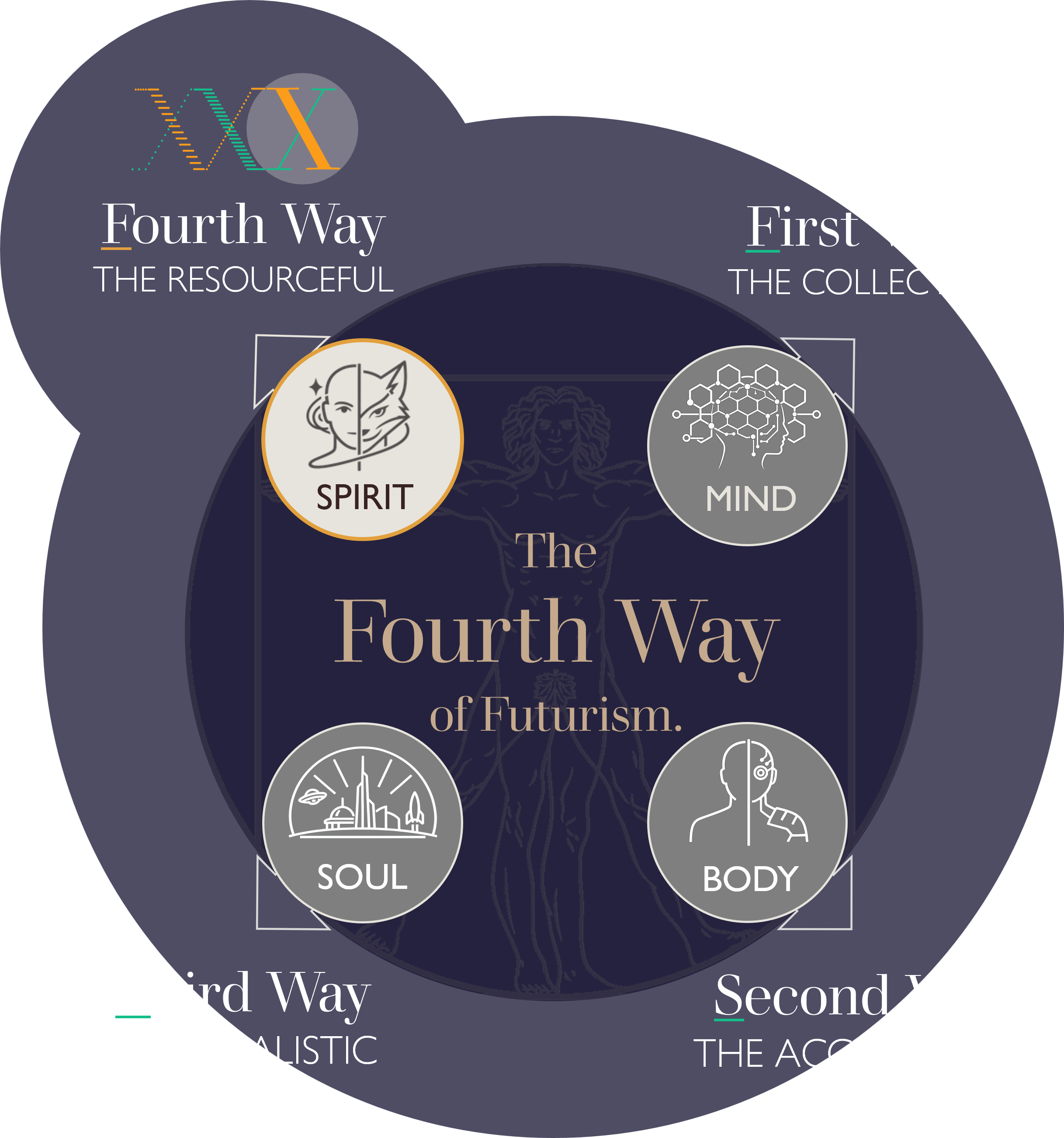
The Fourth Way highlights a cunning, guileful alternative path — one that treats human resourcefulness and flourishing as the primary technologies of progress. Resourcefulness is the red-thread for everything we do, because a more hopeful future begins with the human interior, not the machine exterior.
-
The best way to prepare for the future is to make the most of what you have now. The Fourth Way of Futurism begins with accelerating complexity, exposes fragility, and builds the everyday practices that make coherent, lasting change possible.
The Fourth Way of Futurism is for people who want their agency, not someone else’s prophecy.
Despite 305 million new businesses launching worldwide each year, the gap with corporate leviathans and hyperscalers is growing. So we first challenged ourselves to know, why is this happening?
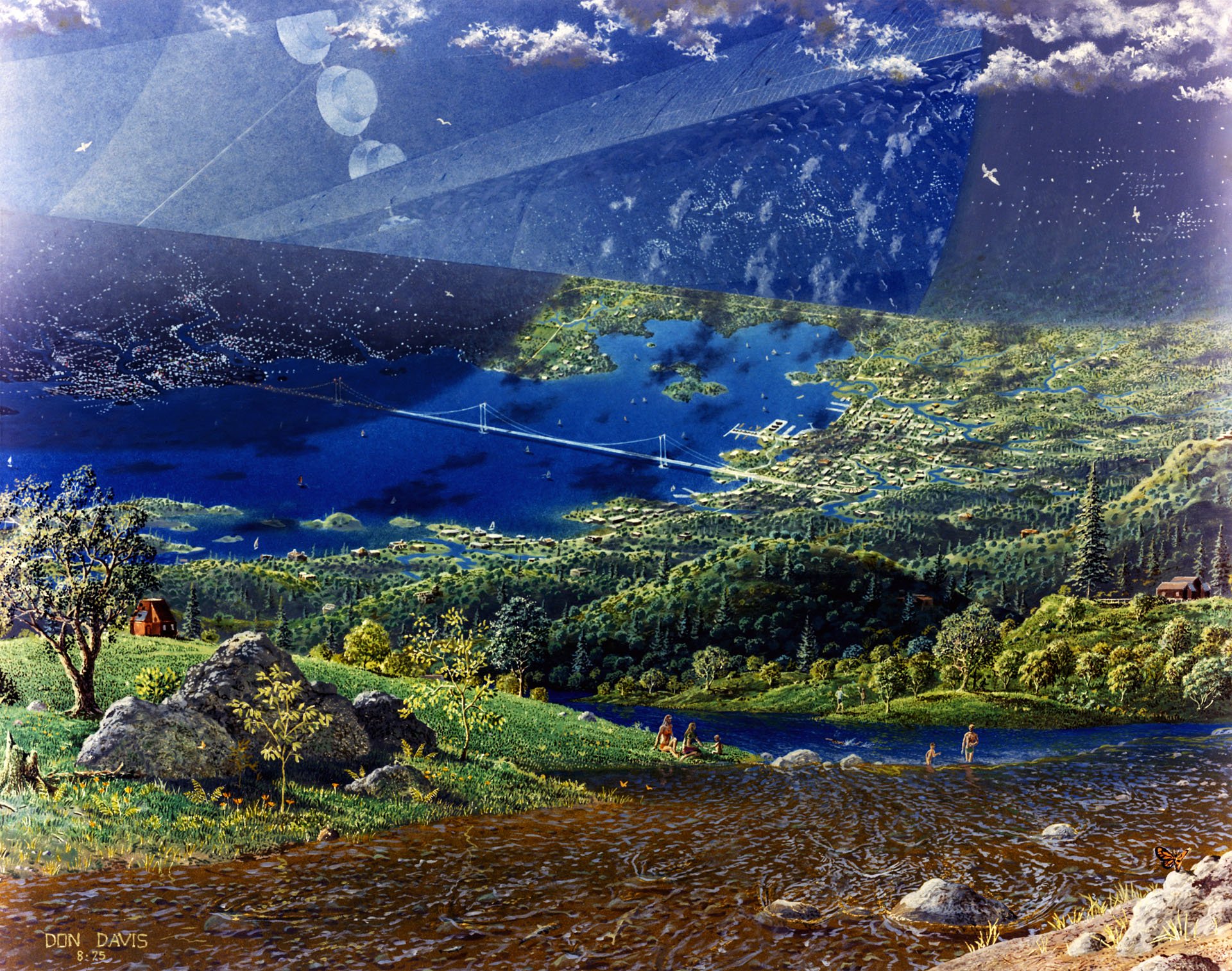
“Why wouldn’t you rehearse for a good future? I think that we should celebrate and rehearse for a bright future, and maybe it will come true.”
— Syd Mead
The Fourth Way reveals the cunning path. What we need now is its current.
The means to carry people from foresight to farsight to nearsight. Where a philosophy becomes a practice, and a practice can become new routines for growth.
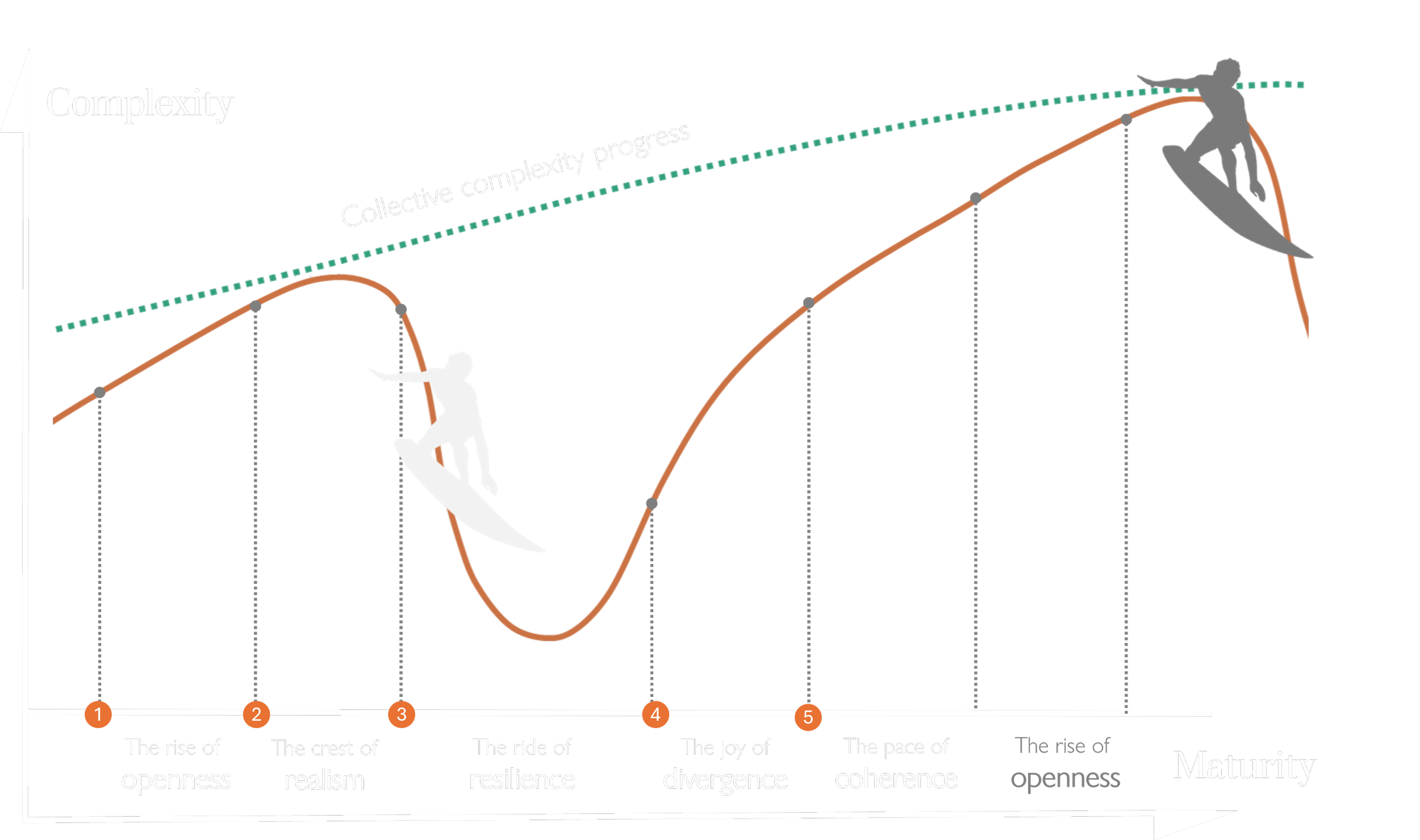
The HITMˣE®
Enthusiasm Wave™
| Way | Culture Says | Technology Says | Science Says | Desired Outcome | Our Method |
|---|---|---|---|---|---|
| Enthusiasm starts with openness to experience | |||||
| First Way | Mind | Collective | Clear Intent | Realism | Reveal |
| Second Way | Body | Accelerated | High Arousal | Resilience | Release |
| Third Way | Soul | Protopian | Feeling Good | Divergence | Retrain |
| Fourth Way | Spirit | Resourceful | Focus On Others | Coherence | Reinspire |
| Reference: The internal structure of enthusiasm: a prototype analysis, Rijn Vogelaar, Eric van Dijk & Wilco W. van Dijk, 2025 | |||||
The energy of resourcefulness is enthusiasm. It separates a fixed trait like optimism from the dynamic actions of resourcefulness and enthusiasm, that makes growth accessible to everyone. Think of it as the path of right resistance.
Enthusiasm in clear scientific terms can be unpacked into attributes. We have codified these into every aspect of the HITMXE® model and method. The precondition is always “Openness to experience”.
Stephen King wrote that when intelligence outraces emotional stability bad things happen. We all have the potential to rise with openness, setup with realism, then surf the wave through resilience, divergence and coherence.