
The rise of the one‑person unicorn and why it might be donkey deal
The news talks about the first one person unicorn business and many people are talking about are trying to be the first to achieve it - it strikes me, how we know more about psychology, mental health and wellness today and yet, our goals are becoming more and more about manifestation of something around one ego, as in, main character energy made real by agents orbiting that ego, but connecting with who? Where do people fit?

There’s a new archetype - meme? - circulating through the entrepreneurial bloodstream “the one‑person unicorn”. A billion‑dollar business built by a single individual, powered by automation, content, and a kind of self‑mythologising that treats isolation as strategy. The one-person unicorn is being exclaimed as the next frontier of ambition — forget 996, you can program an army of AI agents to do the hustle.
It’s the ultimate expression of sovereignty in a world that feels increasingly unstable. But beneath the glossy narrative sits something far more fragile, and far more revealing about the cultural moment we’re living through.
The one‑person unicorn isn’t about business.
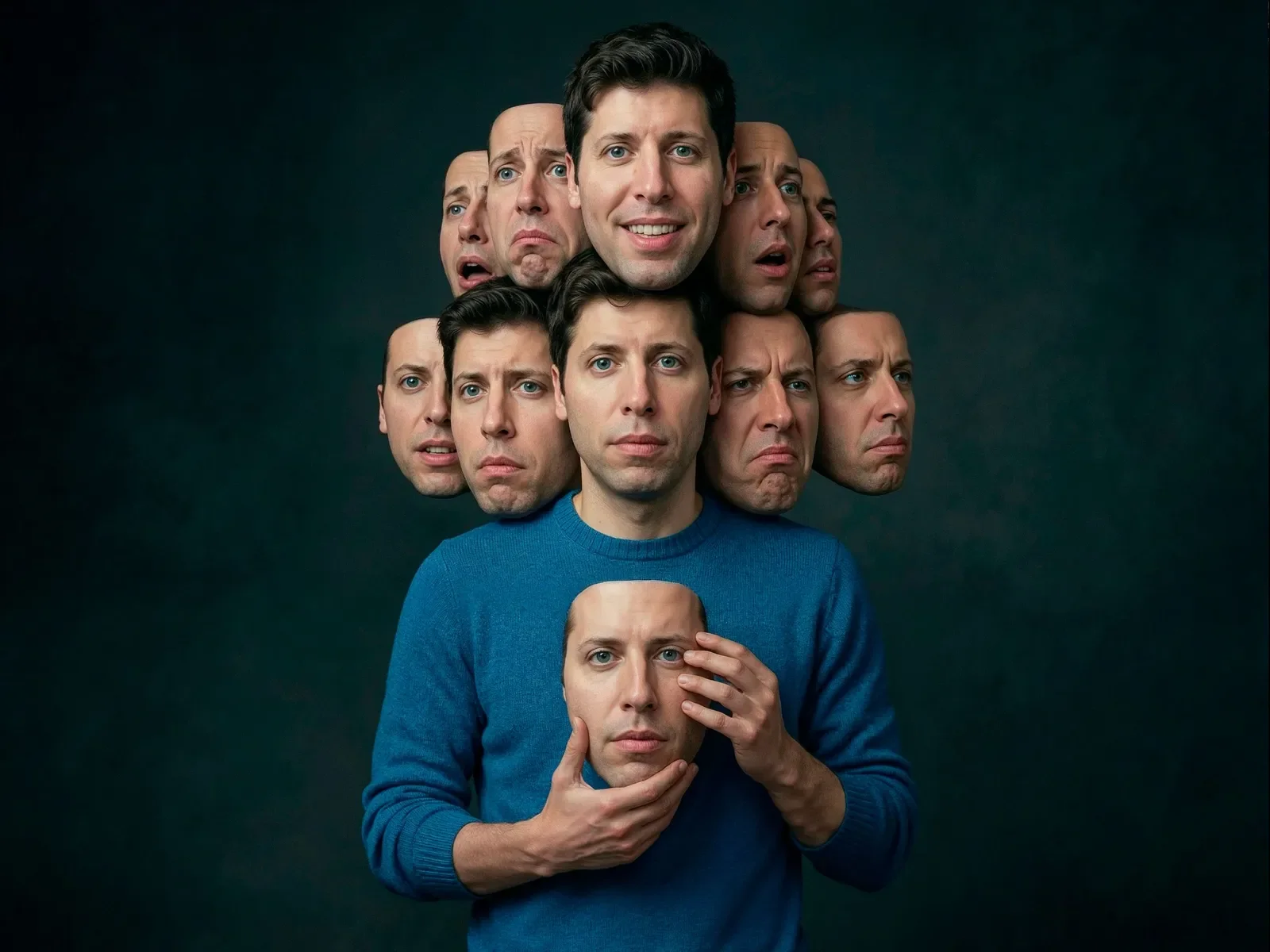
It’s about psychology. And manipulation. It’s about the fantasy of becoming unassailable. It’s about building a life so optimised, so automated, so frictionless that no one can disappoint you, slow you down, or complicate your trajectory. It’s the dream of the billionaire-sets’ total independence, dressed up as innovation.
But independence is not the same as agency. And what’s being sold here is not about agency. It’s the ultimate escape fantasy. Like rising from nothing to become an NFL All-Star.
The story goes like this - and let’s be honest, any term originating from the lips of Sam Altman should be taken with salt, as if it was being generously sprinkled by Salt Bae - If you’re smart enough, disciplined enough, spiritually aligned enough, you can transcend the messy realities of collaboration and community. You can become a self‑contained economic organism. You can be the product, the engine, the brand, the distribution channel, the talent, the strategy, and the story. You can orbit yourself. A god for your machines.
It’s a seductive idea because it promises immunity. Immunity from the chaos of teams. Immunity from the vulnerability of partnership. Immunity from the discomfort of being influenced by other people. Immunity from the messy, complex world.
But immunity is just a proxy for isolation.
But now anyone can Eat The Big Fish?
The marketplace will be healthier!
AI might indeed level the playing field for challenger brands - companies whose ambition far exceeds their resources - to compete against established market leaders. It is also missing the bigger point. In theory, the one‑person unicorn signals a more open market, in reality, as isolation grows, it reflects a coping mechanism, a fantasy incentive, not a model of flourishing.
What’s striking is how neatly this maps onto the broader cultural drift. We have more language for mental health, more access to psychological insight, neuroscientific innovations, more discourse about wellness and boundaries and self‑knowledge — and yet our goals are becoming increasingly solipsistic. The inner-self is no longer something to explore; it’s something to work tirelessly at scaling. The ego itself becomes a business model. The protagonist becomes a product. The world becomes a backdrop for personal optimisation.
This is why the one‑person unicorn feels less like entrepreneurship and more like flexing as a spiritual performance.
It shares DNA with the post‑psychedelic “I’ve unlocked a higher plane” narrative — the belief that a single revelatory experience (or a single clever automation stack) confers a kind of cosmic exemption from ordinary human constraints. Both are attempts to elevate the self above the relational world. Both are responses to overwhelm. Both are coping mechanisms disguised as enlightenment.
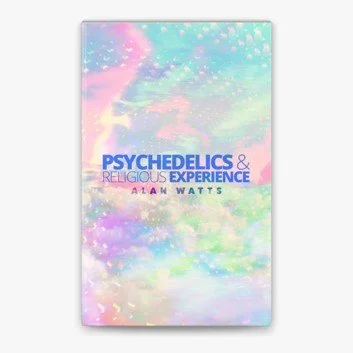
In Psychedelics and Religious Experience (1968), Alan Watts discussed the cosmic consciousness where one realizes that they are connected to the “Ground of Being” , meaning god as the foundational power, source, and depth of existence itself (Tillich).
The common mistake occurs when the person having a psychedelic experience interprets "I am a part of the whole universal process" as "My ego is the all-seeing king of this universe".
Watts believed that a sentient individual is not an isolated "ego in a bag of skin" but rather a way in which the universe can observe itself. The mistake of thinking "I am God" is in maintaining the separation of "I" from "others", rather than the total dissolution of that barrier into a collective consciousness - the transcendent potential of such experiences.
58 years after that book was published, Alan Watts would have treated the one-person unicorn as a new label for the same mistake of ego.
Because the truth is simple and deeply unfashionable: meaningful work is relational. Creativity is relational. Growth is relational. Even sovereignty — the real kind, not the Instagram kind — is relational. It emerges from interdependence, not isolation. It requires friction, accountability, shared stakes, and the willingness to be shaped by something beyond your own reflection.
The one‑person unicorn model strips all of that away. It replaces belonging with audience. It replaces collaboration with contractors. It replaces community with followers. It replaces mutuality with metrics. It replaces identity with brand. It replaces purpose with performance.
And in doing so, it creates a life that is efficient, optimised, and empty.
The irony is that the people chasing this model aren’t wrong about the world. Institutions are brittle. Organisations are confused. Communities have thinned. Trust is scarce. The ground beneath us feels unstable. But the answer to instability isn’t to shrink your world until only you remain. The answer is to build structures that can hold more than one person. To create cultures of enthusiasm, not empires of one. To design work that expands human capacity rather than compressing it into a single heroic narrative.
The rise of the one‑person unicorn is a symptom of a culture that is forgetting how to imagine anything beyond the self. But it’s also an opportunity — a chance to articulate a different kind of ambition. One that doesn’t rely on self‑mythologising or algorithmic validation. One that treats agency as something shared, not hoarded. One that understands that the future isn’t built by protagonists; it’s built by participants.
If the one‑person unicorn is the logical next dream phase of platform capitalism, then the next chapter — the one worth writing — is about rebuilding the relational fabric that makes real innovation possible. Not the fantasy of doing everything alone, but the practice of doing meaningful things together.
That’s the work. And it’s the only work that lasts.
© 2026 Oliver Spalding. All rights reserved. HITMXE® is a registered trademark of Oliver Spalding.
This post is licensed under a Creative Commons Attribution. You may share this content with attribution, but not modify or use it commercially without written permission