
AI eats culture for breakfast
LLMs are deeply attuned to observing culture with unprecedented nuance, offering an incredible research toolset. In part because modern culture lives online as a complex array of signals, patterns and correlations. Are LLMs really cognizant of what cultures mean? We examine why machines feast on the culture of digitalised societies.
• 10 minute read
What is culture?
Before we can talk about AI and culture, we need to be precise about what we mean by “culture” — not the colloquial version, but the civilisational one. Indeed, even the act of defining something as abstract as culture, feels like a touching bubble with a pin.
Culture is the bridge that connects people’s material world to their search for meaning.
Cultures are how groups make sense of existence, transmit memory, ritualise experience, coordinate values, imagine futures and bind individuals into a collective. UNESCO defines it as the total complex of material, intellectual, and emotional features of a society.
Social theorists describe culture as an invisible category of values and norms that, while rooted in the human condition, act as a "species of transcendence" that shapes consciousness; meaning that culture enables humans to go beyond their biology, immediate needs and limitations.
Philosophers like Kant believed that human progress meant being able to transcend their cultural limitations. Kant viewed culture as the final purpose of nature; guiding humanity to the point where people can take responsibility for their own emotional development.
Culture is not content, nor is it identity signalling. It is not a curated aesthetic, or a personal brand.
Culture is a commons. If humanity acts a superorganism, then culture is the superorganism’s capacity to reflect and reason beyond its basic, primal instinct, because it is the slow, intergenerational work of determining how or even if life has meaning. And this is precisely what is being eaten.
What “culture” risks becoming
Over the last century culture has been steadily subsumed - buried is perhaps more appropriate - by a hyperconnected popular culture; a system optimised for visibility, novelty, and performance. This phenomenon has accelerated rapidly in the last ten years, attributed to three major research themes.
1) The commodification of culture
Mass media first standardises culture into predictable, consumable products (Adorno & Horkheimer). That culture becomes a form capital — a resource for social positioning (Bourdieu) that can also be converted into currency. We consider that global currency to be attention: meaning is displaced by whatever captures attention and advertising revenue.
Culture becomes a competitive marketplace, not a collective memory system.
2) The incentivisation of performance
Goffman posits that social life becomes a stage; identity becomes a managed impression. Social media turns everyone into a personal brand, micro‑celebrity and talking head; authenticity becomes a matter of face not of fact (Marwick). Algorithms incentivise and progressively reinforce emotional, extreme, identity‑laden content (Tufekci).
Culture becomes a gratification, not a participation in meaning.
3) The delusion of main‑character energy
Digital life encourages curated selves and narrative selfhood. Even portraying suffering can become a kind of signaling (Turkle). According to Lasch, a culture of normalised narcissism emerges from a society of spectacle. Platforms reward protagonist‑style storytelling, increasing self‑objectification and social comparison.
Culture becomes a personal narrative, not a shared inheritance.
Why AI thrives in this environment
We should not downplay what is genuinely new and powerful. Cultural research - meaning genuine research, not social trendspotting - is considered a very challenging endeavour. To cover a handful of markets and a mixture of qual, quant and NLP would see a cost upward of $150,000.
LLMs have collapsed that process into a series of prompts. LLMs can map cultural patterns at a scale no human can. They can surface latent structures in discourse. They can detect shifts in sentiment, framing, and ideology. They can articulate cultural logics with clarity and neutrality. They can reveal the hidden architecture of modern meaning‑making.
None of which is trivial. It is a new form of cultural analysis that’s fast, wide, and pattern‑literate.
But it only works because culture has become thin enough to model.
What AI cannot digest
The internet is not a complete cultural archive. It is a partial, biased, recency‑frequency-engagement weighted snapshot of human expression.
AI is trained on perhaps 5–30% of what we would consider the totality of human culture.
Missing from the cultural dataset:
✗ Oral traditions which UNESCO estimates to be over half of the world’s cultural heritage.
✗ Embodied rituals that even when recorded, the meaning is not faithfully captured
✗ Indigenous epistemologies are often incompatible with Western textual formats
✗ Intergenerational memory where the internet captures published memory, not lived memory.
✗ Non‑Westernised cosmologies often flattened into Wikipedia‑style summaries
✗ The lived experience of history across all senses and dimensions.
Notwithstanding that The United States accounts for roughly one‑third of global internet data, which means the cultural training substrate is disproportionately Anglophone, Western, urban, and platform‑shaped.
So, LLMs cannot reconstruct what humanity never uploaded. They can simulate depth, but they cannot ground it. They can remix the past, but they cannot remember it. They can describe meaning, but they can’t create it.
AI is not hollowing out culture.
LLMs are revealing a void.
AI is not the cause of cultural decline, but the observer and messenger. That knowledge in itself gives us back some agency to redress the balance.
As tempting as it is to think otherwise, Tech CEOs are not philistines or secretly hostile to culture. It’s that the dominant mental model of the tech industry makes culture almost impossible to see, because culture is everything their worldview is structurally designed to ignore unless it can be controlled and quantified. That is precisely how we described what culture is becoming. It has taken the industry about twenty years to master the mechanics.
When culture becomes individualised, commodified, instantaneous, performative and algorithmically presented it loses the substance that makes it a bridge between matter and meaning. Call it cultification - a process of turning a commodified thing into a cultural object, characterized by intense devotion and fierce community loyalty - think k-pop, the beyhive and short-lived infamy of Prime Drinks. Once that tipping point was reached the tech industry knew exactly how to apply their model.
LLMs then expose the hollowness. They show us how much of what is called “culture” is actually content and identity. The artefacts of algorithms. A simulcra.
AI eats culture for breakfast because we’ve turned culture into something edible.
The counter‑model: Rebuilding cultures as a shared architecture
Cultures must be cultivated because they are how societies remember, how groups coordinate and how meaning becomes collective. It is how identity becomes shared and embedded rather than performed and mimicked. Culture is how imagination becomes participative. Ultimately cultures are how people experience belonging, obligation, and purpose. 60% of employees describe themselves as emotionally detached from their jobs (Gallup). 61% of highly stressed adults reporting feelings of detachment from society (APA). 53% of U.S. adults view their fellow citizens as “morally bad” (Pew Research Center).
If culture is to have a future, it cannot be left to popularity, platforms, or pattern engines. It’s not a ornament sat atop the fireplace of attention.
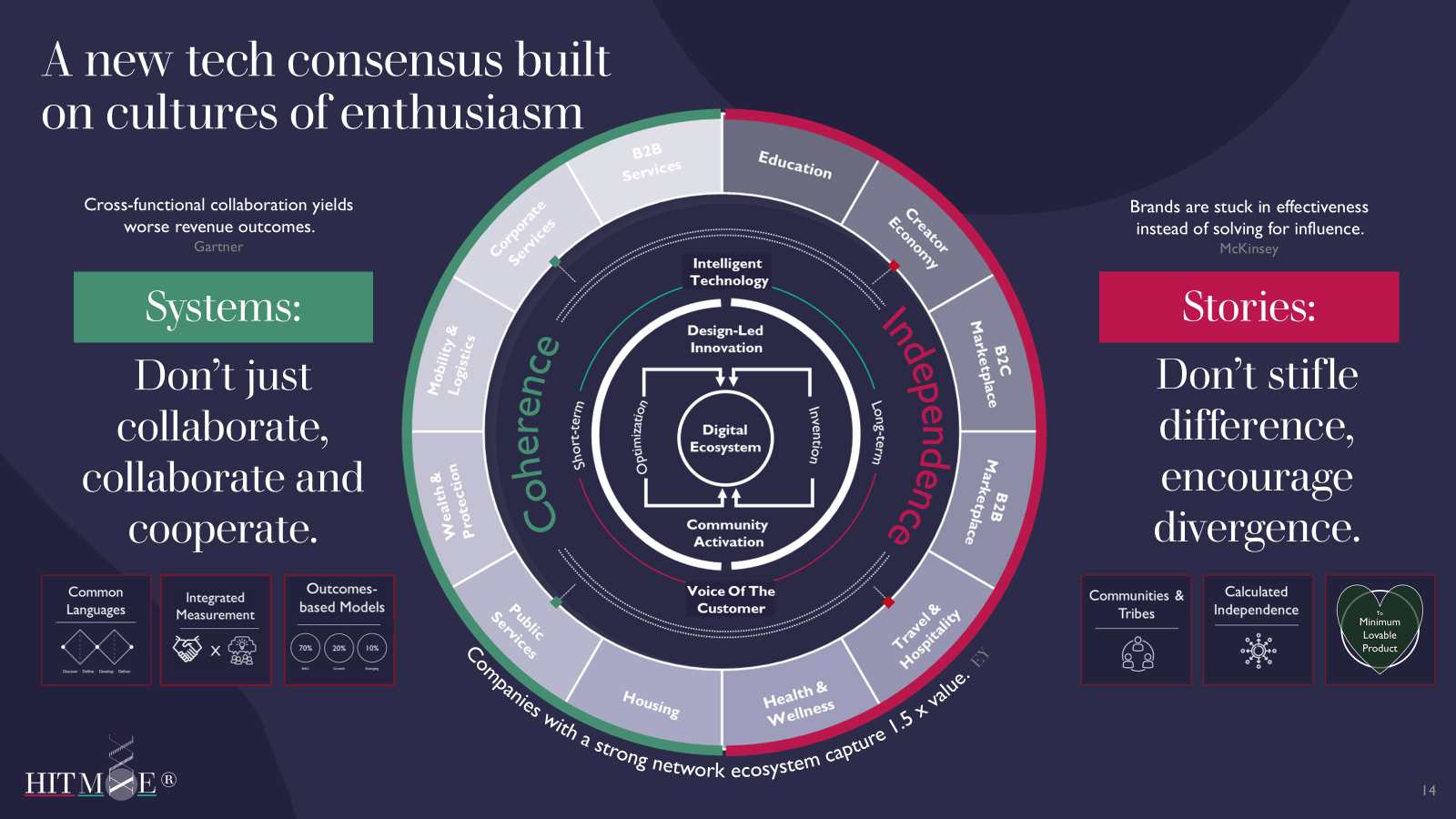
Culture is the connective tissue of society and this is the reasoning behind HITMXE’s focus on building “cultures of enthusiasm” - as true of a person or comunity as it is a team, business or organisation. This is culture in its original sense — not as branding, but as a core system for human flourishing. A Fourth Way of Futurism, dare we be so bold.
Shared purpose
Shared architecture
Shared consequence
Shared imagination
Shared standards & credo
Shared participation.
The future of culture is a choice, not a prediction
Continuing on the current trajectory, future historians might record 21st‑century culture as “a fast, thin, performative and algorithmically distorted layer of data dominated by identity and novelty. One that’s structured to conceal meaning. In the 21st century, culture meant shared spectacle, not collective transcendence.”
This is not inevitable, It is still a choice. If enough people intervene in time — if we take care of cultures as a shared investment — they may describe it as the moment we rediscovered culture as a hyperconnector between matter and meaning. In doing so, rejecting and redesigning outdated digital incentive systems to reward resourceful contribution, instead of manufactured hype and exploited primal instincts.
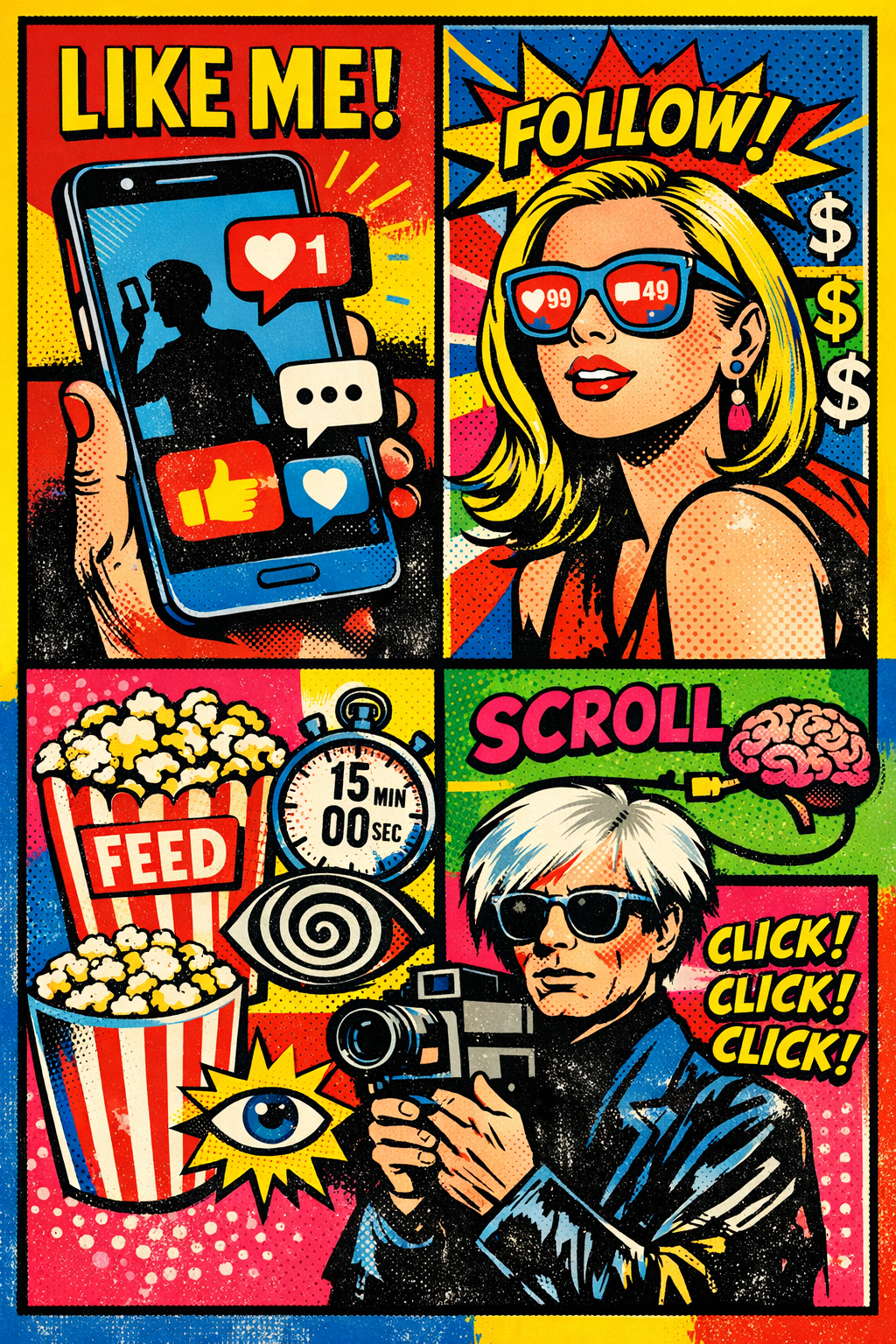
Andy Warhol lampooned popular culture through high art, becoming an icon in dramatising tension between consumerism and culture, using what had been commercial printing techniques to produce “Pop Art”. Instead of rejecting the Attention Economy, Warhol would have thrived with it, because he treated attention not as validation but as material, transforming the spectacle into a mirror that culture couldn’t look away from.
Cultures of enthusiasm are not a management tool. They are an architectural approach to an intervention, arguing the case that, with the right rewards, people are naturally wired to create meaning together. Purpose is shared, not performed, with enthusiasm as a civic force. Cultures are systems of mutual orientation. Architecture matters more than aesthetics. Depth matters more than novelty. Participation matters more than pretence.
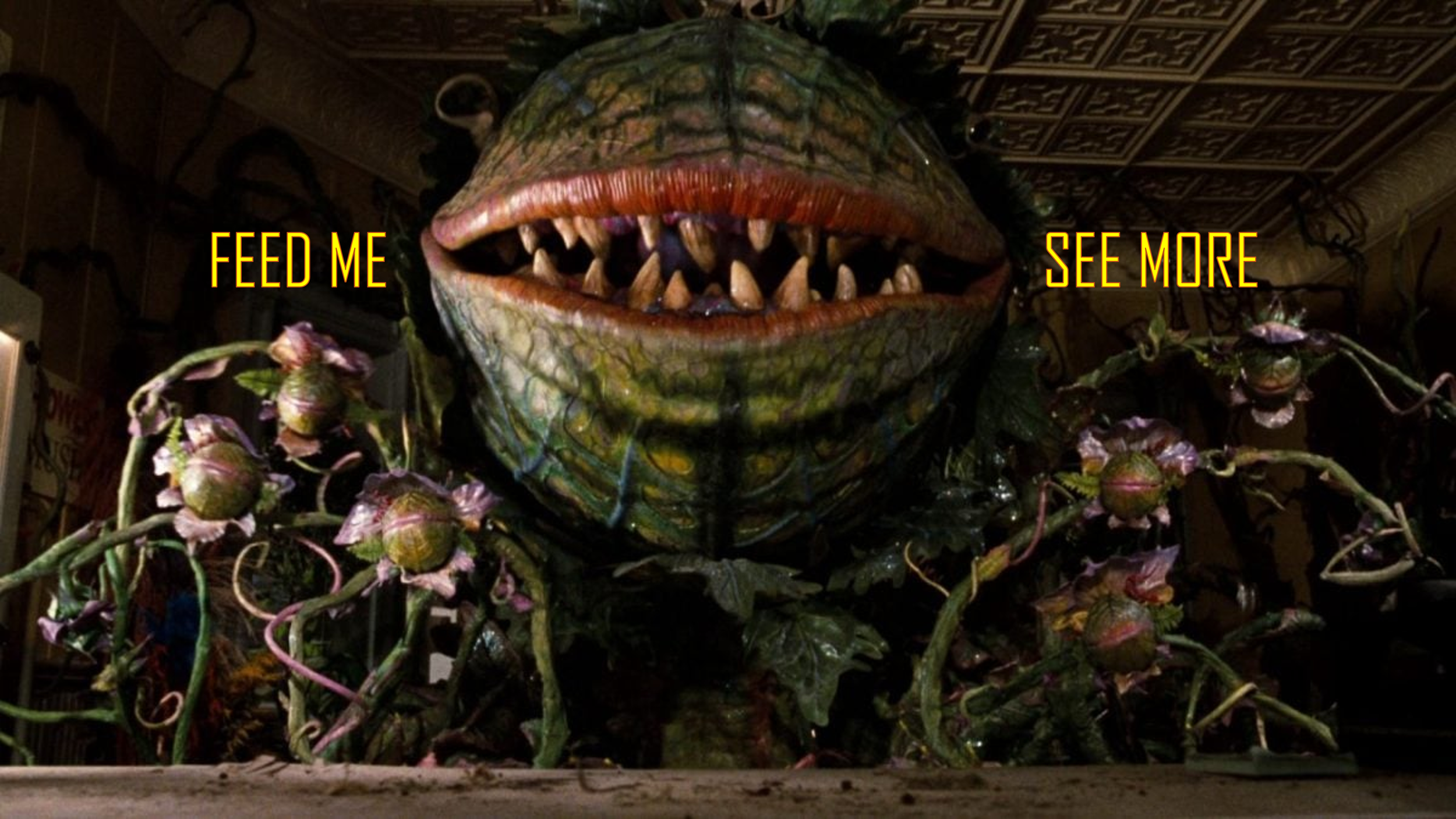
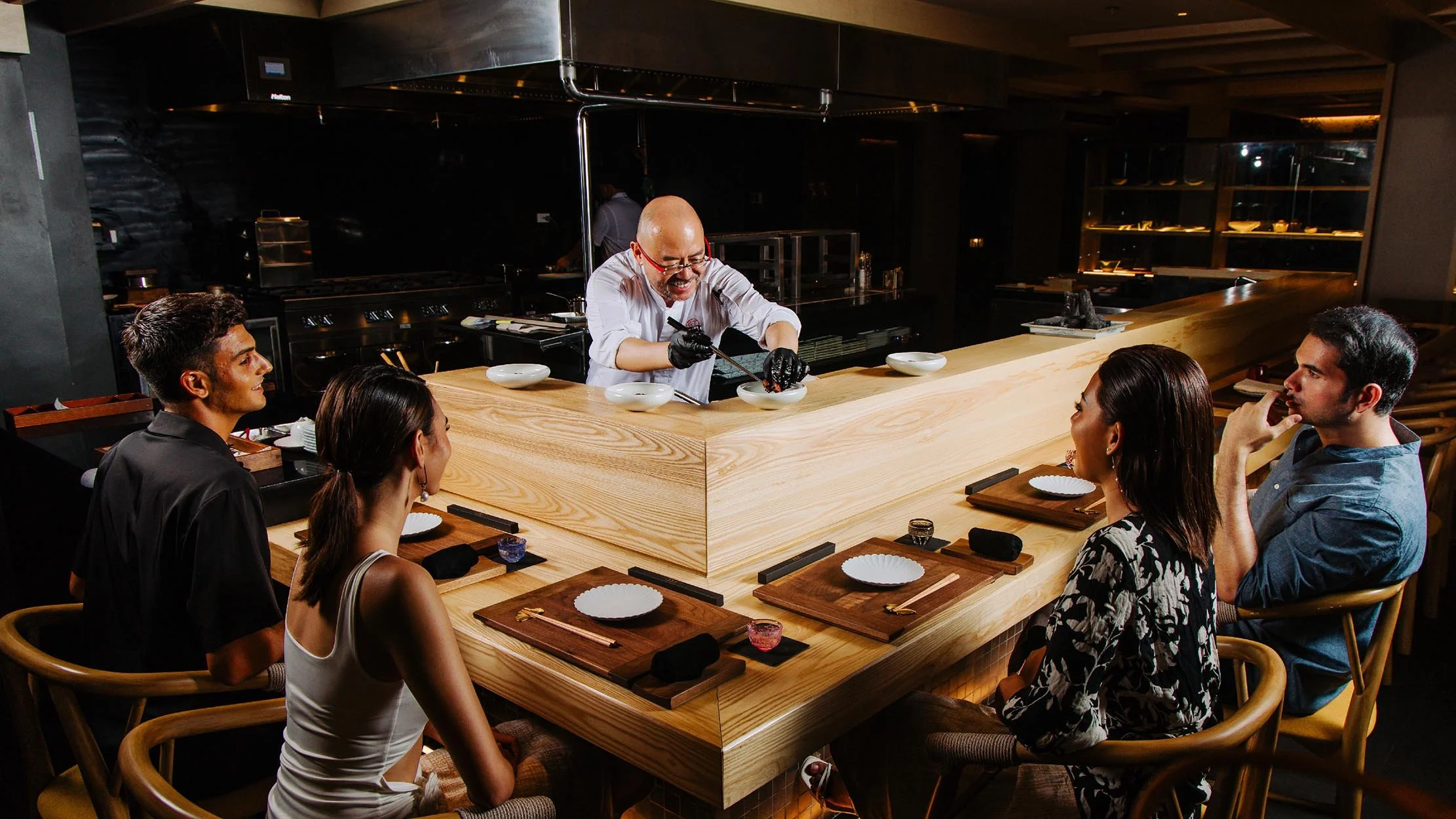
In a world where the cultural machine screams “Feed Me!” cultures of enthusiasm offer something else. Think of it like a great Omakase dining experience. In an era defined by fast-paced social media, information overload, and doomscrolling, the philosophy of omakase encourages intentionality, intimacy, trust, and presence. It’s a celebration of contribution and artistic endeavor, focused on others not self. A place to dine on meaning, not metrics. A place where culture becomes healthy; a balance of strength, mobility and capacity for imagination. A place where humans, not algorithms, once again define what matters.
© 2026 Oliver Spalding. All rights reserved. HITMXE® is a registered trademark of Oliver Spalding.
This post is licensed under a Creative Commons Attribution. You may share this content with attribution, but not modify or use it commercially without written permission